Tokaido Shinkansen · timing
When do you see Mt. Fuji from the Shinkansen?
On a Nozomi from Tokyo, get ready at roughly 40 minutes; the train passes the Shin-Fuji area around 45 minutes. In the other direction this is roughly 45 minutes before Tokyo. These are planning cues rather than a measured visibility duration, and actual timing varies by train.
Quick answer
- From Tokyo: get ready around 40 minutes after departure; the train is near Shin-Fuji around 45. Keep watching until roughly 48. Right side, seat E.
- From Kyoto: get ready around 85 minutes; near Shin-Fuji around 88. From Shin-Osaka: get ready around 100; near Shin-Fuji around 103. Left side, seat E.
- These are Nozomi times. A Hikari runs a few minutes later; a Kodama takes roughly 65 to 75 minutes from Tokyo and stops at Shin-Fuji itself.
- The landmark: Shin-Fuji Station. The view is at its best as the train passes it and crosses the Fuji River just to the west.
Where you'll see it
Mt. Fuji is on your right — best at Shin-Fuji
Where in Japan?
The dot locates the section shown below.


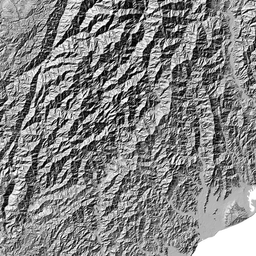


Map and shaded relief © Geospatial Information Authority of Japan (GSI) · Track © OpenStreetMap contributors · Japan outline: Natural Earth.
Free seat checker
Which way are you travelling?
Minutes after departure, by station
Find the station you board at. The three figures are minutes after your train leaves it.
| Boarding at | Fuji is on the | Get ready | Near Shin-Fuji | Keep watching to |
|---|---|---|---|---|
| Tokyo | Right · seat E | 40 min | 45 min | 48 min |
| Shinagawa | Right · seat E | 33 min | 38 min | 41 min |
| Shin-Yokohama | Right · seat E | 22 min | 27 min | 30 min |
| Nagoya | Left · seat E | 48 min | 51 min | 56 min |
| Kyoto | Left · seat E | 85 min | 88 min | 93 min |
| Shin-Osaka | Left · seat E | 100 min | 103 min | 108 min |
Approximate Nozomi planning cues inferred from published station running times. They are not measured sighting times and can vary by train. In Green Cars the Fuji-side window is seat D.
Clock times for common departures
The same estimate turned into clock times, for a Nozomi leaving on the hour. For a train at :12 or :30 past, add those minutes — or use the checker above, which does it for you.
| Departs | Get ready | Near Shin-Fuji | Keep watching to |
|---|---|---|---|
| 06:00 | 06:40 | 06:45 | 06:48 |
| 07:00 | 07:40 | 07:45 | 07:48 |
| 08:00 | 08:40 | 08:45 | 08:48 |
| 09:00 | 09:40 | 09:45 | 09:48 |
| 10:00 | 10:40 | 10:45 | 10:48 |
| 11:00 | 11:40 | 11:45 | 11:48 |
| 12:00 | 12:40 | 12:45 | 12:48 |
| 13:00 | 13:40 | 13:45 | 13:48 |
| 14:00 | 14:40 | 14:45 | 14:48 |
| 15:00 | 15:40 | 15:45 | 15:48 |
| 16:00 | 16:40 | 16:45 | 16:48 |
| Departs | Get ready | Near Shin-Fuji | Keep watching to |
|---|---|---|---|
| 06:00 | 07:25 | 07:28 | 07:33 |
| 07:00 | 08:25 | 08:28 | 08:33 |
| 08:00 | 09:25 | 09:28 | 09:33 |
| 09:00 | 10:25 | 10:28 | 10:33 |
| 10:00 | 11:25 | 11:28 | 11:33 |
| 11:00 | 12:25 | 12:28 | 12:33 |
| 12:00 | 13:25 | 13:28 | 13:33 |
| 13:00 | 14:25 | 14:28 | 14:33 |
| 14:00 | 15:25 | 15:28 | 15:33 |
| 15:00 | 16:25 | 16:28 | 16:33 |
| 16:00 | 17:25 | 17:28 | 17:33 |
What you pass, in order
Leaving Tokyo. Nothing for the first half hour: Shinagawa, Shin-Yokohama, then Odawara and a run of tunnels through the hills behind Atami. The long one before Mishima is your cue. When the train comes out of it and passes Mishima Station, Mt. Fuji is ahead of you on the right — about 40 minutes in.
The train reaches the main viewing area around Shin-Fuji at about 45 minutes in, then crosses the Fuji River. Barriers, buildings, weather and passing trains can interrupt the view, so keep watching until roughly 48 minutes rather than treating either time as exact.
Heading to Tokyo. The same stretch in reverse. After Shizuoka Station, watch the left side: the Fuji River bridge comes first, then Shin-Fuji, then a slower fade as the train runs on toward Mishima. From Kyoto that is about 85 to 93 minutes after departure.
Nozomi, Hikari and Kodama
Every figure on this page is for a Nozomi, because that is what most visitors ride and because it is the hardest to look up: a Nozomi does not stop at Shin-Fuji, so no timetable prints a time for it there. The estimate comes from its published times at the stations either side.
A Hikari stops at a few more stations on the way and passes Shin-Fuji later than a Nozomi that left at the same minute — allow five to ten minutes more, depending on how many stops it makes.
A Kodama stops everywhere, Shin-Fuji included, and takes roughly 65 to 75 minutes to reach it from Tokyo. That makes it the easy case: the Shin-Fuji time is in the timetable. Be at the window a few minutes before it.
Which months give you the best odds
Knowing the minute only helps if the sky cooperates, and that depends far more on the season than on the day. Winter mornings over this stretch are clear about half the time; in June and July it is closer to one morning in six. Whatever the month, go early — cloud builds on the mountain through the day, and after dark there is nothing to see at all. In December the sun sets around 16:30, so a train leaving Tokyo after about 16:00 reaches Fuji after sunset.
Clear mornings over the Fuji stretch, by month
Share of 07:00–10:00 hours with cloud cover of 30% or less.
| Jan | 48% | |
|---|---|---|
| Feb | 41% | |
| Mar | 34% | |
| Apr | 31% | |
| May | 22% | |
| Jun | 15% | |
| Jul | 17% | |
| Aug | 27% | |
| Sep | 27% | |
| Oct | 30% | |
| Nov | 46% | |
| Dec | 48% |
From 2016–2025 cloud-cover records for this stretch. A guide to the season, not a sighting log.
FAQ
- How many minutes after leaving Tokyo do you see Mt. Fuji?
- On a Nozomi, use about 40 minutes after Tokyo as a cue to get ready; the train passes the Shin-Fuji area at roughly 45 minutes. Keep watching until about 48 minutes. These are planning estimates, not exact sighting times.
- When do you see Mt. Fuji going from Kyoto or Osaka to Tokyo?
- Get ready around 85 minutes after leaving Kyoto on a Nozomi and around 100 minutes after leaving Shin-Osaka. The train passes the Shin-Fuji area at roughly 88 and 103 minutes respectively. Mt. Fuji is on the left in this direction.
- How long is Mt. Fuji visible from the Shinkansen?
- There is no reliable fixed duration. The mountain can appear intermittently in several sections, and buildings, barriers, weather and other trains affect the view. JR Central identifies the area around Shin-Fuji as the main photo opportunity, so be ready before the station.
- Is the timing different on a Hikari or Kodama?
- Yes. A Hikari makes extra stops and passes a few minutes later than a Nozomi that left at the same time. A Kodama stops at every station, including Shin-Fuji itself, and takes roughly 65 to 75 minutes to get there from Tokyo — its Shin-Fuji arrival is printed in the timetable, which is the time to watch for.
How these times are worked out
Train times. Estimated from Nozomi running times between the stations where the timetable does give a time. They assume an on-time train and will be out by a few minutes on any given day, and they are not taken from any single train's timetable.
Forecast. Hourly cloud cover and rain for a point beside Shin-Fuji Station, from Open-Meteo, for the next ten days.
Monthly odds. The share of 07:00–10:00 hours from 2016 to 2025 in which cloud cover over that same point was 30% or less, from ERA5 reanalysis data. It describes the sky, not the mountain: a thin cap of cloud on the summit will not show up in it, and it is not a record of anyone's sightings.