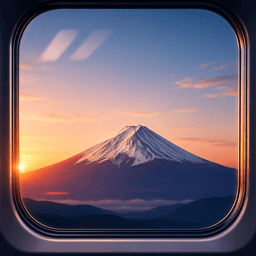
Train type decision
Nozomi vs Hikari vs Kodama: Which Shinkansen Should You Take?
Same trains, same tracks, same seats — different stops. Nozomi is fastest (Tokyo–Shin-Osaka ~2h30), Hikari ~3h, Kodama stops everywhere. The classic JR Pass does not cover Nozomi without a supplement.
Quick answer
- Single tickets: take the Nozomi — fastest, most frequent, same price class.
- JR Pass: take the Hikari — Nozomi isn’t covered by the classic pass.
- Mt. Fuji: Seat E works on all three — the train type doesn’t change the seat.
- Kodama: only worth it for short hops (e.g. to Shin-Fuji or Atami) or the slowest, calmest ride.
Side-by-side: Tokyo → Shin-Osaka
Approximate times — always confirm the timetable when you book.
| Train | Stops | Time | Classic JR Pass | Best for |
|---|---|---|---|---|
| Nozomi | Fewest (major cities only) | ~2h 30m | Not covered (supplement or single ticket) | Most travelers on single tickets |
| Hikari | Major + selected stations | ~3h 00m | Covered | JR Pass holders |
| Kodama | Every station (incl. Shin-Fuji) | ~3h 50m+ | Covered | Short hops, unhurried rides |
Why Nozomi wins on single tickets
Nozomi trains run several times an hour on the Tokyo–Osaka corridor and cost roughly the same as Hikari on a single ticket. Unless you hold a classic JR Pass, there is rarely a reason to take a slower service for a long leg. Book a reserved seat and you also lock in the Fuji-side window.
The main exception is the JR Pass: the classic pass excludes Nozomi and Mizuho. Pass holders ride Hikari (about 30 minutes slower to Shin-Osaka) or pay the separate Nozomi supplement where it is offered.
The Mt. Fuji angle
All three services pass the same viewing zone around Shin-Fuji station, and the seat advice never changes: Seat E in Ordinary Cars, Seat D in Green Car. Kodama actually stops at Shin-Fuji, which slows the passage and stretches the view; Nozomi and most Hikari sweep through at full speed for the classic 30–60 second window.
Decide, then book
Single ticket on the Nozomi for most trips; compare the JR Pass only if your route has multiple long-distance legs.
FAQ
- What is the difference between Nozomi, Hikari, and Kodama?
- They are the same physical trains on the same Tokaido Shinkansen line — the only difference is how many stations they stop at. Nozomi stops the least (Tokyo–Shin-Osaka in about 2h30), Hikari stops at more stations (~3h), and Kodama stops at every station (~4h).
- Does the JR Pass cover the Nozomi?
- The classic JR Pass does not include Nozomi or Mizuho services — pass holders ride Hikari or Kodama, or pay a separate Nozomi supplement where offered. If you buy single tickets instead, you can take any train including Nozomi.
- Is the Mt. Fuji seat different on Nozomi, Hikari, or Kodama?
- No. All three run the same route past Mt. Fuji, so the advice is identical: Seat E in Ordinary Cars (Seat D in Green Car) is usually the Fuji-side window in both directions.
- Which train is best for seeing Mt. Fuji?
- The view is essentially the same from all three. Kodama stops at Shin-Fuji station in the heart of the viewing zone, which adds a slower, longer look; Nozomi and most Hikari pass through at full speed. For most travelers the time saved on a Nozomi outweighs the slightly longer glimpse.
Related pages
Suggested next steps